Agricultural Cultivating Machine: A Buyer's Overview
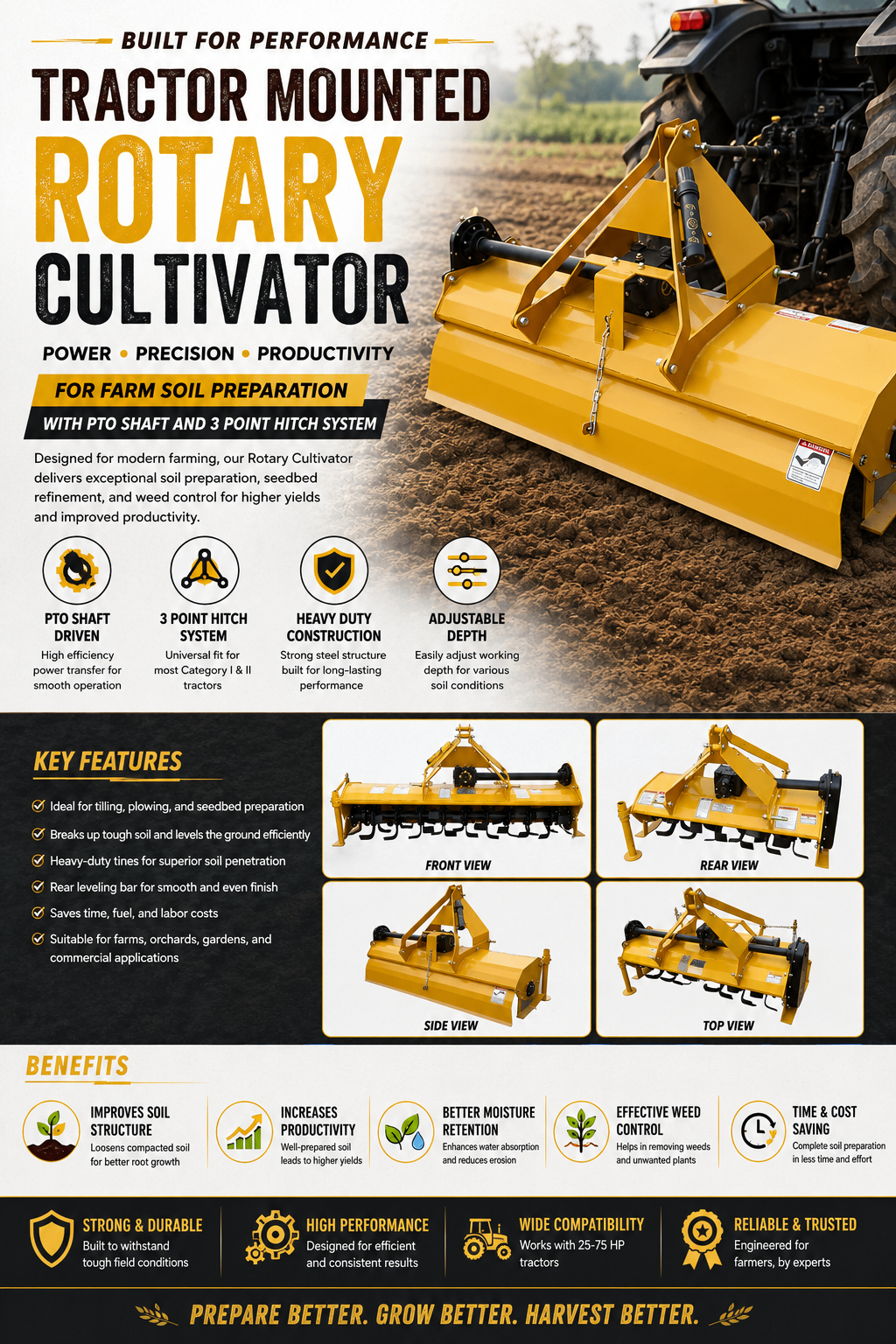
Choosing the right farm tiller cultivator can significantly improve the field's productivity. This manual explores important factors to consider before making a investment. To begin with, assess your field's size and type. Smaller areas may benefit a lighter model, while bigger operations need a heavier-duty device. Subsequently, evaluate the tilling width and intensity features. Finally, note to assess financial funds and the supplier's standing for reliability and owner service.
Maximize Your Ground Prep with a Tractor Mounted Tiller Cultivator
Preparing your field for planting can be time-consuming, especially on big areas. A implement mounted rotary tool offers a significant edge by efficiently breaking up hard soil, mixing fertilizers, and creating a loose seedbed. This machinery allows you to work greater area in less time, reducing labor expenses. Consider these key features when selecting a model:
- Engine capacity – Match it to your implement's horsepower.
- Working width – Determines the quantity of soil tilled per pass.
- Depth adjustment – Allows you to tailor the tilling extent.
Investing in a implement mounted rotary tiller is a smart investment for any farmer seeking to boost soil health and improve crop yields. It's a real help!
Rotating Tillers Cultivator: Strength and Performance for Your Farm
Maximize your harvest with a heavy-duty PTO rotary tiller . These powerful machines are built to easily conquer tough soil conditions , breaking it up for optimal cultivation. Boasting a direct link to your tractor's PTO, these tillers deliver uninterrupted force ensuring a clean tilling of your fields . Choose a PTO tilling machine and enjoy the difference in your farming operation .
Finding the Ideal Tractor Garden Tiller for Your Requirements
Choosing the correct tractor garden tiller can feel overwhelming , but understanding your particular job requirements is key . Consider the dimensions of the land you’ll be cultivating . Lightweight tractors generally require less heavy-duty tillers, while expansive areas might benefit from a beefier model. Think about the kind here of earth you're dealing with – clay soil will need a tiller with greater power and sturdy tines. Furthermore , consider options like adjustable depth and lateral discharge. Ultimately , research multiple producers and examine customer opinions before giving your definitive decision.
- Assess your area size.
- Consider the soil type.
- Inspect the tiller's power .
- Compare multiple brands .
Rotary Tillers: Varieties , Advantages , and Functions | Uses}
Powered cultivators are critical implements mounted to machines for loosening the earth in farming settings. Such machinery generally fall into multiple types, including pull-behind models and varying motor sizes. The main benefit is their ability to rapidly till dense soil , mixing compost and establishing a prepared seedbed. Common applications include from primary land preparation to unwanted plant suppression and incorporating plant residue back into the earth . In conclusion , they significantly enhance yield output and lessen labor demands.
Enhance Your Fieldwork : Tractor Rotary Tillers Explained
Are you facing challenges preparing soil for cultivation? Think about upgrading your farming practice with a agricultural rotary cultivator . These powerful implements effectively break up compacted soil, incorporating nutrients and creating a fine seedbed. Unlike traditional methods, rotary tillers use whirling tines to chop the earth, producing increased plant growth and reduced effort. Find out how a rotary tiller can revolutionize your agricultural practices today!